
LPLC Staff Publish Book: Assessing Disciplinary Writing in Both Research and Practice

Lee Pesky Learning Center (LPLC) announces an important leadership transition. Executive Director Maureen O’Toole will be stepping away from her position to attend to family health matters. The entire LPLC community expresses deep gratitude for Maureen’s leadership, compassion, and unwavering dedication to advancing our mission of helping students, families, and educators overcome learning challenges and reach their full potential. 

During her tenure, Maureen guided the Center through a period of growth and adaptation while strengthening relationships with community partners, expanding access to services, and championing programs that ensure all learners have the tools and support they need to succeed. Her empathy, professionalism, and focus on mission-driven impact have left an enduring mark on the organization and those it serves. 

Stepping into the role of Executive Director is Dr. Lindy Crawford, who previously led Lee Pesky Learning Center and now returns with optimism and a renewed vision for impact. Dr. Crawford brings deep institutional knowledge, decades of educational leadership experience, and an unwavering commitment to the Center’s mission. Her familiarity with LPLC’s team, community, and the broader educational landscape in Idaho ensures continuity, stability, and momentum during this transition. 

“Lee Pesky Learning Center’s professional expertise is second to none and it is my great honor to once again serve alongside an incredibly accomplished and deeply empathetic team,” said Dr. Crawford. “For close to 30 years, LPLC has led educational innovation using an evidence-based approach to teaching and learning. I am excited to play a small part in our continued evolution.” 

Board Chair Jim Foudy added, “We are profoundly grateful to Maureen for her care, leadership, and commitment to every learner we serve. We’re equally confident in welcoming Lindy back to guide LPLC into its next chapter. Her deep knowledge of LPLC and her passion for education will be a great asset to the organization during this transition period.” 

For nearly three decades, Lee Pesky Learning Center has helped thousands of students, families, and educators overcome obstacles to learning through direct academic and clinical services, professional training, and community partnerships. The organization remains steadfast in its mission to ensure every learner has the opportunity to thrive. 

Boise, Idaho— This past August 2023, Lee Pesky Learning Center’s Grants Manager Dr. Tracey Hodges co-edited a newly released book: Assessing Disciplinary Writing in Both Research and Practice. LPLC Executive Director Dr. Lindy Crawford and Educational Specialist Ashley Rowe, as well as Dr. Tracey Hodges, were contributing writers.

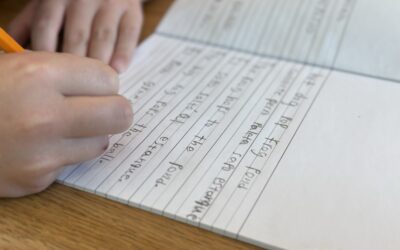
The ability for young children to communicate effectively and reach their career goals in the future requires skill building in specific content areas. Assessing Disciplinary Writing in Both Research and Practice tackles the challenge of measuring children’s writing skills across content areas including, but not limited to, subjects such as English, writing, science, social studies, and math. The intent of this publication is to elevate the quality and effectiveness of writing instruction across these content specific areas. Additionally, this book will advance education research and application of best practices in the classroom.

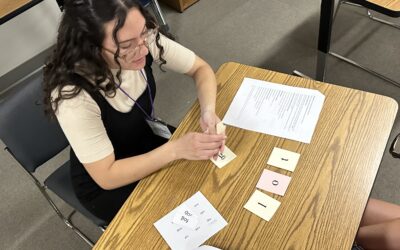
Dr. Lindy Crawford and Ashley Rowe wrote Chapter 5 alongside co-authors Sarah Quebec Fuentes and Jacqueline Huscroft-D’Angelo. This chapter–Framework for Evaluating Written Explanations of Numerical Reasoning—examines the importance of communication specifically in mathematics. Encouraging students to share their thought process provides an opportunity to examine the ‘why’ of mathematical knowledge.

Dr. Tracey Hodges wrote Chapter 7 alongside co-authors Dr. Katherine Wright, Dr. Julianne Wenner, and Dr. Erin McTigue. In this chapter, entitled The Rubric for Scientific Writing: A Tool to Support Both Assessment and Instruction, the authors create a rubric that assesses science content and writing skill in parallel. Pulling data from 75 middle and high school writing samples, the chapter demonstrates the necessity of using measures that yield valid and reliable scores in order to help students construct scientific arguments.

According to lead Co-Editor Dr. Tracey Hodges, “Writing to communicate information, argue, or persuade is challenging, yet students can develop this important skill while learning across all school disciplines. The contributors and editorial board who provided their expertise in this edited volume bring nuance, innovation, and potential solutions to the ways we assess students in complex writing practices. I am excited to share this research compilation as a step toward helping students become more confident and motivated writers.”

Additional information about Assessing Disciplinary Writing in Both Research and Practice can be viewed online here.

You May Also Like

Science of Reading

Science of Reading

The Lee Pesky Learning Center specializes in literacy instruction grounded in...