
Science of Reading

Lee Pesky Learning Center (LPLC) announces an important leadership transition. Executive Director Maureen O’Toole will be stepping away from her position to attend to family health matters. The entire LPLC community expresses deep gratitude for Maureen’s leadership, compassion, and unwavering dedication to advancing our mission of helping students, families, and educators overcome learning challenges and reach their full potential. 

During her tenure, Maureen guided the Center through a period of growth and adaptation while strengthening relationships with community partners, expanding access to services, and championing programs that ensure all learners have the tools and support they need to succeed. Her empathy, professionalism, and focus on mission-driven impact have left an enduring mark on the organization and those it serves. 

Stepping into the role of Executive Director is Dr. Lindy Crawford, who previously led Lee Pesky Learning Center and now returns with optimism and a renewed vision for impact. Dr. Crawford brings deep institutional knowledge, decades of educational leadership experience, and an unwavering commitment to the Center’s mission. Her familiarity with LPLC’s team, community, and the broader educational landscape in Idaho ensures continuity, stability, and momentum during this transition. 

“Lee Pesky Learning Center’s professional expertise is second to none and it is my great honor to once again serve alongside an incredibly accomplished and deeply empathetic team,” said Dr. Crawford. “For close to 30 years, LPLC has led educational innovation using an evidence-based approach to teaching and learning. I am excited to play a small part in our continued evolution.” 

Board Chair Jim Foudy added, “We are profoundly grateful to Maureen for her care, leadership, and commitment to every learner we serve. We’re equally confident in welcoming Lindy back to guide LPLC into its next chapter. Her deep knowledge of LPLC and her passion for education will be a great asset to the organization during this transition period.” 

For nearly three decades, Lee Pesky Learning Center has helped thousands of students, families, and educators overcome obstacles to learning through direct academic and clinical services, professional training, and community partnerships. The organization remains steadfast in its mission to ensure every learner has the opportunity to thrive. 

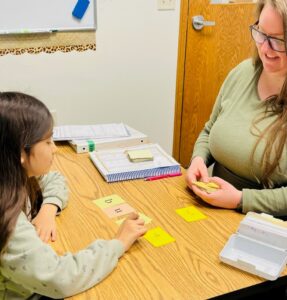
The Lee Pesky Learning Center specializes in literacy instruction grounded in the Science of Reading (SoR). This research-based approach informs our Professional Development training, small-group multilingual Literacy Pods, and one-on-one Academic Intervention programs. But what exactly is the Science of Reading? Who developed it? Is it a curriculum? Let’s explore.

What is the Science of Reading?

The Science of Reading is a body of evidence explaining how people learn to read and write proficiently. According to The Reading League, it provides:

“A preponderance of evidence to inform how proficient reading and writing develop; why some individuals struggle; and how we can effectively assess, teach, and improve student outcomes through prevention and intervention.”

SoR is not a curriculum but an evidence-based framework that integrates key literacy components, including:

  • Word recognition
  • Decoding
  • Phonological awareness
  • Sight word recognition (for early readers)

As students advance, instruction expands to include:

  • Language comprehension
  • Vocabulary
  • Background knowledge
  • Language structures
  • Literacy knowledge
  • Verbal reasoning

At Lee Pesky Learning Center, we tailor instruction using assessment data, classroom teacher input, and direct student interactions.
Who Developed It?

The Science of Reading is informed by interdisciplinary research, drawing from fields such as:

  • Cognitive Psychology
  • Communication Sciences
  • Developmental Psychology
  • Education
  • Implementation Science
  • Linguistics
  • Neuroscience
  • School Psychology

Is it a Curriculum?

No. The Science of Reading is not a curriculum but a research-based approach to literacy instruction. It identifies effective strategies and helps educators adapt instruction to meet individual student needs. SoR can:

  • Enhance an existing curriculum
  • Guide the development of a structured literacy program with a defined scope and sequence

And It Works!

With systematic, explicit instruction, literacy skills improve rapidly:

  • First-grade students participating in the Lee Pesky Literacy Pods in the 2024 Wood River Valley Summer Bridge program increased their English oral reading proficiency by 150%.
  • Academic-year program participants improved their sight word vocabulary by 50%.

By using proven Science of Reading principles, we empower students to become confident, skilled readers.

You May Also Like